 Trusted Car Reviews, News & Buying Advice.
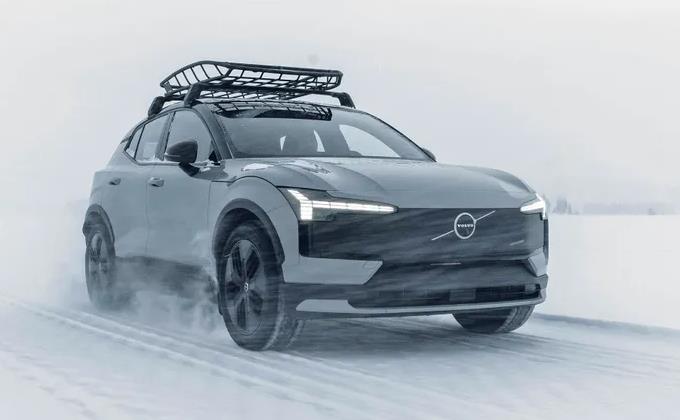
The electric SUV market in 2026 has reached a turning point. What was once a premium niche segment dominated by high-priced models is now firmly entering the mainstream, especially in the sub-$50,000 category. In both the United States and Europe, buyers are no longer forced to choose between affordability and modern EV technology. Instead, they are presented with a growing lineup of electric SUVs that combine usable range, fast charging, advanced software, and family-friendly practicality—all within a relatively accessible budget.
This shift is driven by several converging forces: battery cost reductions, aggressive competition among legacy automakers and new EV manufacturers, and stronger government incentives in Europe and parts of the US. At the same time, consumer expectations have evolved. Range anxiety is less dominant, but charging speed, interior tech quality, and real-world efficiency have become the new deciding factors.
Below is a detailed breakdown of the best electric SUVs under $50,000 available or widely expected to be relevant in 2026 across the US and Europe, along with analysis of why they stand out and how they reflect broader industry trends.
The 2026 EV SUV Landscape: What Has Changed
Before looking at individual models, it is important to understand the key trends shaping this segment.
One of the most significant developments is the rapid adoption of LFP (Lithium Iron Phosphate) batteries in entry and mid-level EVs. These batteries are cheaper, more thermally stable, and increasingly capable of delivering 250–350 miles of real-world range. This has allowed manufacturers to reduce prices without severely compromising usability.
Another major shift is the rise of 800V charging architecture, previously reserved for luxury EVs. By 2026, more mid-priced SUVs can charge from 10% to 80% in under 25 minutes, dramatically improving long-distance usability.
Software has also become a key battleground. Over-the-air updates, route-based battery preconditioning, and AI-assisted driving features are now expected even in sub-$50,000 vehicles. In both the US and Europe, vehicles that lack strong infotainment ecosystems are quickly losing competitiveness.
Finally, regulatory pressure in Europe has accelerated electrification in compact SUV segments, making models like the Renault and Volkswagen offerings more mature and refined than ever.
Tesla Model Y (Entry Variants)
The Tesla Model Y remains one of the most influential vehicles in the global EV market, and even in 2026, its entry-level configurations often fall near or just under the $50,000 threshold depending on incentives and regional pricing.
What keeps the Model Y relevant is not just range or performance, but ecosystem integration. Tesla’s software experience is still among the most cohesive in the industry, with highly efficient energy management, strong navigation intelligence, and one of the most reliable fast-charging networks in North America and parts of Europe.
In terms of real-world use, the Model Y continues to excel in efficiency, especially in highway driving. Its minimalist interior remains polarizing, but its practicality is undeniable, offering strong cargo space and family usability.
However, competition has narrowed its advantage. Ride comfort and interior material quality are no longer class-leading compared to newer European and Korean rivals.
Hyundai Ioniq 5 (Base & Mid Variants)
The Hyundai Ioniq 5 continues to be one of the most balanced EV SUVs in the global market. Built on Hyundai’s E-GMP platform, it offers 800V ultra-fast charging capability in many trims, which remains a key competitive advantage in the sub-$50K category.
The design philosophy emphasizes spaciousness and comfort rather than sportiness. Inside, the flat-floor architecture creates an unusually open cabin feel for a compact SUV. This makes it particularly attractive for families and urban commuters who prioritize comfort over aggressive styling.
In 2026, the Ioniq 5 stands out for its refined driving dynamics and consistently strong build quality improvements since its early release. While its infotainment system is not the most advanced in the segment, it is stable and user-friendly.
Its main limitation remains real-world highway efficiency compared to some newer aerodynamic competitors, but overall, it remains one of the most complete EV packages under $50,000.
Kia EV6 (Sport-Oriented Alternative)
Closely related to the Ioniq 5, the Kia EV6 takes a more performance-focused approach. It shares the same platform but emphasizes driving dynamics, lower seating position, and a more coupe-like silhouette.
The EV6 is particularly appealing to drivers who want a sportier EV experience without moving into luxury pricing territory. The steering is sharper than most competitors, and dual-motor variants deliver strong acceleration that rivals entry-level performance SUVs from premium brands.
Charging speed is another highlight, with 800V architecture enabling extremely fast DC charging sessions when paired with compatible infrastructure.
Its trade-off is slightly reduced interior space compared to more upright rivals, but for many buyers, the driving experience justifies the compromise.
Volkswagen ID.4 (Refined Practicality for Europe and US)
The Volkswagen ID.4 represents a more traditional European approach to electric mobility: simple, practical, and designed for mass-market adoption.
By 2026, Volkswagen has significantly improved software performance and charging consistency, two areas where early versions of the ID series faced criticism. The ID.4 now delivers a more stable and predictable ownership experience.
Its strength lies in usability. The interior layout is straightforward, space-efficient, and family-friendly. Ride comfort is tuned for long-distance cruising rather than sporty driving, making it particularly appealing in European highway conditions.
While it lacks the excitement of some competitors, its balanced approach and improved reliability make it one of the safest choices in the segment.
Ford Mustang Mach-E (American Performance Identity)
The Ford Mustang Mach-E continues to occupy a unique position in the US EV market. It blends traditional American performance branding with modern electric architecture.
In 2026, the Mach-E benefits from incremental improvements in software and battery efficiency. It offers strong acceleration across most trims and remains one of the more engaging EV SUVs to drive in its price range.
The interior design leans more toward a digital cockpit experience, with a large central display and relatively clean dashboard layout. While some competitors feel more futuristic, the Mach-E focuses on familiarity with a tech-forward twist.
Its main limitation is charging ecosystem dependence outside Tesla’s network, but in urban and suburban environments, it remains a compelling option.
Chevrolet Equinox EV (Value Leader in the US Market)
The Chevrolet Equinox EV is one of the strongest value-oriented entries in the US EV SUV market. Positioned aggressively under the $50,000 mark, it is designed to bring EV adoption to a wider mainstream audience.
Its design prioritizes efficiency and affordability, but without feeling overly stripped down. GM’s Ultium platform provides solid range estimates and competitive charging speeds, especially in higher trims.
The Equinox EV’s biggest advantage is its pricing strategy combined with usable space and modern connectivity features. It is not the most luxurious or fastest, but it delivers consistent practicality for daily commuting and family use.
In 2026, it represents a key “volume player” in the US EV transition.
Renault Scenic E-Tech (European Family Favorite)
In Europe, the Renault Scenic E-Tech has redefined the idea of a compact electric family SUV. It combines efficiency, lightweight engineering, and a strong focus on interior comfort.
Renault has positioned this model as a direct response to growing demand for practical EVs that do not feel oversized or unnecessarily complex. The Scenic E-Tech is particularly strong in urban and suburban European environments where efficiency and maneuverability matter more than outright power.
Its interior design emphasizes sustainability and modularity, aligning with broader European automotive trends toward eco-friendly materials and circular manufacturing principles.
Škoda Enyaq (Balanced European Workhorse)
The Škoda Enyaq continues to be one of the most underrated but highly practical EV SUVs in Europe. Built on the Volkswagen MEB platform, it focuses heavily on space utilization and long-distance comfort.
In 2026, the Enyaq benefits from improved software integration and more efficient battery management systems. It is particularly strong in real-world usability, offering one of the most comfortable rear-seat experiences in its segment.
Its design philosophy is straightforward: maximize space, minimize complexity, and ensure durability. This makes it especially attractive for families and fleet buyers.
MG ZS EV (Budget Entry Option)
The MG ZS EV remains one of the most affordable electric SUVs widely available in both parts of Europe and select international markets. While it does not compete with premium EVs in performance or technology, it plays an important role in democratizing electric mobility.
By 2026, MG has improved battery efficiency and infotainment responsiveness, making it more competitive in the entry-level segment. Its primary advantage is price accessibility combined with acceptable range for daily commuting.
It is best viewed as a gateway EV rather than a long-term performance leader.
Key Market Trends Defining 2026
Several overarching trends define the competitive landscape of EV SUVs under $50,000:
First, range convergence is occurring. Most credible models now fall within a 250–350 mile real-world range band, reducing range as a primary differentiator.
Second, charging speed has become more important than peak range. Vehicles capable of ultra-fast charging are gaining a significant advantage in urbanized markets.
Third, software ecosystems increasingly determine long-term satisfaction. Vehicles that support seamless updates, intelligent route planning, and stable infotainment systems retain higher customer satisfaction scores.
Fourth, European models are focusing more on efficiency and sustainability, while US models often emphasize size, performance, and digital integration.
Finally, competition from Chinese EV manufacturers is indirectly influencing pricing pressure globally, even if many models are not yet dominant in the US market.
A Highly Competitive, Maturing Segment
The 2026 electric SUV market under $50,000 is no longer experimental—it is mature, competitive, and increasingly consumer-friendly. Buyers today are not choosing between “good and bad” EVs, but between different philosophies: performance vs efficiency, software vs simplicity, global platforms vs region-specific tuning.
Models like the Tesla Model Y, Hyundai Ioniq 5, Kia EV6, Volkswagen ID.4, Ford Mustang Mach-E, Chevrolet Equinox EV, Renault Scenic E-Tech, Škoda Enyaq, and MG ZS EV collectively demonstrate how far the industry has progressed in just a few years.
Ultimately, the best choice depends less on raw specifications and more on lifestyle needs. Whether it is fast charging for road trips, spacious interiors for families, or efficient commuting for urban life, the 2026 EV SUV market finally offers a genuinely complete range of options under the $50,000 threshold.


Leave a Reply