 Trusted Car Reviews, News & Buying Advice.
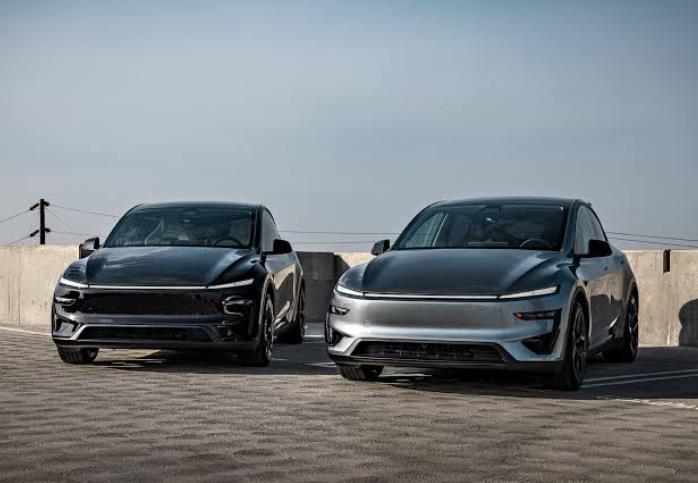
The electric vehicle landscape is evolving at a pace that continues to accelerate, and few companies have shaped that trajectory more than Tesla. As we move into 2026, speculation and strategic analysis around Tesla’s product roadmap has become one of the most discussed topics in the global automotive industry. Investors, analysts, and EV enthusiasts are all trying to answer the same question: what comes next after the current generation of Tesla vehicles, and how will the company maintain its leadership in an increasingly competitive market?
Unlike traditional automakers, Tesla does not follow a conventional model-year refresh cycle. Instead, it operates on a continuously evolving platform strategy, where hardware and software improvements are rolled out iteratively. This makes any “roadmap” discussion inherently fluid. However, based on current production trends, supply chain signals, factory expansions, AI development, and public statements from leadership, we can construct a well-grounded outlook on Tesla’s likely direction through 2026 and beyond.
This article explores the most probable upcoming Tesla models, platform shifts, and strategic priorities that define the company’s next phase.
The Strategic Direction Behind Tesla’s 2026 Vision
Tesla’s roadmap is no longer just about electric cars. It is about building an integrated ecosystem that includes autonomous driving, energy infrastructure, robotics, and AI computing. Vehicles are increasingly becoming nodes in a larger software-driven network rather than standalone products.
By 2026, Tesla’s strategic priorities are expected to revolve around four pillars:
First, cost reduction through next-generation manufacturing. Tesla has been aggressively pursuing “unboxed” manufacturing concepts that aim to simplify vehicle assembly, reduce parts count, and lower production costs significantly. This approach is designed to enable truly mass-market EV pricing.
Second, autonomy. Tesla’s Full Self-Driving (FSD) system continues to evolve toward higher levels of autonomy, and 2026 is widely expected to be a critical inflection point in whether Tesla can move closer to unsupervised driving in defined environments.
Third, platform consolidation. Instead of building many distinct vehicle architectures, Tesla is moving toward fewer, highly scalable platforms that can support multiple body styles and price points.
Fourth, expansion of AI and robotics beyond vehicles, including developments tied to humanoid robotics and energy optimization systems.
These pillars influence every vehicle expected in the 2026 pipeline.
Model 3 and Model Y: The Continuous Evolution Strategy
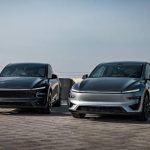
The most important vehicles in Tesla’s lineup remain the mass-market backbone: the Tesla Model 3 and the Tesla Model Y.
Rather than being replaced entirely, these models are expected to continue evolving through incremental but meaningful updates. By 2026, several key developments are likely:
A major focus will be manufacturing simplification. Tesla has already begun redesigning internal components to reduce wiring complexity and improve assembly efficiency. The next phase is expected to further reduce production costs, potentially enabling lower starting prices or improved margins without price increases.
Battery improvements are also central. Tesla’s ongoing development of next-generation cell chemistry, including higher energy density and faster charging capabilities, is expected to gradually enhance range and performance. While revolutionary battery breakthroughs are often overhyped in the short term, incremental improvements by 2026 are highly likely.
Software will continue to be the most visible upgrade channel. Tesla’s over-the-air update system allows the Model 3 and Model Y to gain new capabilities without hardware changes. By 2026, we may see more advanced driver assistance features integrated into standard packages, narrowing the gap between assisted and semi-autonomous driving.
The Model Y, in particular, is expected to maintain its position as Tesla’s global volume leader, especially in markets like Europe and China where compact SUVs dominate demand.
Cybertruck: From Novelty to Scalable Product
The Tesla Cybertruck represents one of the most ambitious product bets in Tesla’s history. Its unconventional design and stainless-steel exoskeleton made it one of the most debated vehicle launches in the industry.
By 2026, the Cybertruck is expected to transition from early production scaling into a more mature product phase. The key question is not whether it will succeed as a niche product, but whether Tesla can expand its appeal beyond early adopters.
Several developments are likely to define its trajectory:
Production optimization will be a major focus. Early manufacturing challenges associated with its unique structure are expected to be gradually resolved as Tesla refines tooling and assembly processes.
Battery performance and towing efficiency will likely be improved through software optimization and incremental hardware updates. This is critical for positioning Cybertruck as a legitimate competitor in the full-size pickup segment.
There is also speculation that Tesla may introduce additional variants, potentially including a lower-cost configuration with reduced range or simplified materials. This would help expand its market reach, particularly in North America.
If successful, Cybertruck could become not just a design statement but a profitable high-volume product line.
The Next-Generation Compact EV: Tesla’s Most Important Unconfirmed Model
One of the most anticipated developments in Tesla’s roadmap is a next-generation affordable electric vehicle often referred to informally as the “Model 2” or “next-gen compact EV.”
While Tesla has not officially confirmed a name, the strategic direction suggests a strong push toward a sub-$30,000–$35,000 price segment. This vehicle is expected to be built on Tesla’s next-generation platform, which emphasizes radical manufacturing simplification and cost efficiency.
Key expectations for this model include:
A smaller footprint than Model 3, designed for dense urban environments and emerging markets. The design may prioritize efficiency over performance, with optimized aerodynamics and lightweight construction.
A significantly simplified interior and wiring architecture, reducing reliance on traditional dashboards and physical controls.
A focus on autonomy-ready hardware, even if full self-driving capability is not immediately available in all regions.
This vehicle is arguably the most important product in Tesla’s 2026 roadmap because it determines whether Tesla can transition from a premium EV manufacturer into a true global mass-market automotive leader.
Robotaxi Vision: A Platform, Not Just a Vehicle
One of the most transformative elements of Tesla’s future roadmap is the concept of the autonomous ride-hailing network, often referred to as Robotaxi.
Rather than being a single model, the Robotaxi strategy is expected to involve dedicated vehicle designs optimized for autonomous operation. These vehicles would remove traditional driving components such as steering wheels and pedals in fully regulated environments.
Tesla’s long-term goal is to create a fleet of autonomous vehicles that operate as revenue-generating assets rather than privately owned cars. This shifts the business model from hardware sales to mobility-as-a-service.
By 2026, the key question is whether Tesla will achieve regulatory approval and technological maturity in select regions to deploy limited Robotaxi services. Even partial deployment in controlled cities would mark a major milestone.
The success of this initiative depends heavily on advancements in Tesla’s AI systems, particularly vision-based neural networks and real-world driving data accumulation.
Roadster: The Halo Product That Tests Engineering Limits
The next-generation Tesla Roadster remains one of the most delayed yet symbolically important vehicles in Tesla’s lineup.
While not a volume product, the Roadster serves as a technological showcase. It represents the extreme end of Tesla’s engineering ambitions, particularly in acceleration, aerodynamics, and energy density.
By 2026, expectations center around whether Tesla will finally bring this vehicle into limited production or continue refining its specifications. The Roadster is often positioned as a demonstration of what future battery and motor technologies can achieve.
Features frequently associated with the Roadster concept include ultra-high performance acceleration and advanced thermal management systems. However, the timeline remains uncertain, and it may continue to evolve alongside Tesla’s broader battery research.
Platform Unification and Manufacturing Revolution
A critical but less visible part of Tesla’s roadmap is platform convergence. Instead of designing separate architectures for each model, Tesla is moving toward shared structural and electrical systems across its entire lineup.
This approach reduces production complexity and increases scalability. It also enables faster introduction of new models since much of the underlying engineering can be reused.
The so-called “unboxed manufacturing” approach is central to this transformation. Instead of assembling vehicles linearly, Tesla aims to build major sections of a car in parallel and then integrate them at the final stage. This could dramatically reduce factory footprint and assembly time.
By 2026, early versions of this system may already be influencing production efficiency in new or upgraded facilities.
Energy Integration and Vehicle Ecosystem Expansion
Tesla’s roadmap is not limited to vehicles alone. Energy storage systems, solar integration, and grid-level battery solutions are increasingly intertwined with its automotive strategy.
Vehicles are expected to become more deeply integrated with home energy systems. Features such as bidirectional charging could allow EVs to serve as mobile energy storage units, supporting homes during peak demand or outages.
This convergence between transportation and energy infrastructure represents a major competitive advantage for Tesla compared to traditional automakers.
By 2026, we may see more standardized integration between Tesla vehicles and home energy products, reinforcing ecosystem lock-in.
Competitive Pressure and Market Reality
While Tesla remains a dominant force in the EV market, competition has intensified significantly. Established automakers in Europe, the United States, and China are rapidly expanding their electric lineups, often at competitive price points.
This competitive environment puts pressure on Tesla to accelerate innovation while maintaining cost efficiency. The success of its 2026 roadmap depends not only on technological breakthroughs but also on execution speed and manufacturing discipline.
The affordable EV segment, in particular, has become the most critical battleground. If Tesla successfully launches a next-generation compact EV at scale, it could reinforce its global leadership. If not, competitors may erode its market share in key regions.
2026 as a Defining Inflection Point
Tesla’s 2026 roadmap is not defined by a single vehicle launch, but by a convergence of multiple strategic shifts. The evolution of Model 3 and Model Y, the scaling of Cybertruck, the potential introduction of a new affordable compact EV, and the ongoing development of autonomous Robotaxi systems all point toward a company undergoing structural transformation.
At the same time, Tesla is redefining what it means to be an automaker. It is transitioning into an AI-driven mobility and energy platform where vehicles are only one part of a broader ecosystem.
Whether all elements of this roadmap materialize on schedule remains uncertain. However, what is clear is that 2026 will be a pivotal year in determining whether Tesla can maintain its technological leadership while expanding into true mass-market dominance.
The next phase of Tesla’s evolution is no longer just about electric cars—it is about building the foundation for autonomous, software-defined transportation at global scale.

Leave a Reply