 Trusted Car Reviews, News & Buying Advice.
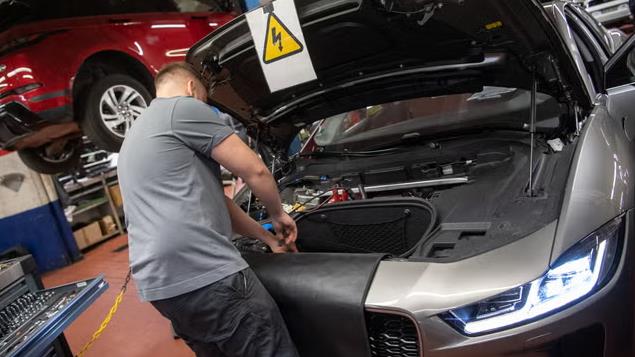
Electric vehicles have moved from early adoption to mainstream dominance in many markets by 2026. With brands like Tesla, Ford, Hyundai, BYD, and Volkswagen pushing long-range, software-defined electric platforms, the question of maintenance has become more important than ever. Yet it’s also more confusing than in the internal combustion era. Traditional “every 5,000 miles oil change” logic no longer applies, and many new EV owners either over-service their vehicles unnecessarily or under-service critical components that still require attention.
Understanding how often you should service an electric vehicle in 2026 requires a shift in mindset. EVs are not maintenance-free, but they are maintenance-different. The service schedule is now defined less by mechanical wear from combustion and more by software systems, battery health management, thermal control, braking regeneration balance, and high-voltage safety inspections.
This article breaks down real-world EV service intervals, manufacturer recommendations, driving conditions, and the emerging trends shaping maintenance schedules in 2026.
Understanding What “Service” Means for an EV in 2026
To properly understand service intervals, we first need to redefine what “service” actually includes for an electric vehicle.
Unlike gasoline cars, EVs do not require oil changes, fuel system cleaning, spark plug replacement, or exhaust system maintenance. However, they still rely on complex mechanical and electronic systems that degrade over time.
In 2026, a standard EV service typically includes:
Battery health diagnostics and state-of-health report
Brake system inspection (even if regenerative braking reduces wear)
Tire rotation and alignment checks
Cabin air filter replacement
Coolant system inspection for battery thermal management
Software updates and ECU recalibration
Suspension and chassis inspection
High-voltage cable and insulation safety checks
The biggest misconception is that EVs require no scheduled maintenance. In reality, the maintenance focus has simply shifted from engine wear to system optimization and safety monitoring.
General EV Service Intervals in 2026
Most manufacturers in 2026 follow a hybrid service model: a combination of mileage-based and time-based inspections.
A typical baseline schedule looks like this:
Every 12,000 to 15,000 miles or 12 months
Basic inspection, tire rotation, software updates, brake check, cabin filter
Every 24,000 to 30,000 miles or 2 years
Full brake system service, coolant check, suspension inspection, alignment
Every 40,000 to 60,000 miles
Battery thermal system inspection, reduction gear lubrication (if applicable), deeper diagnostics
Every 100,000 miles or more
Comprehensive high-voltage system evaluation, battery degradation analysis, drivetrain inspection
These intervals vary depending on manufacturer design philosophy. For example, Tesla-style minimal maintenance models rely heavily on remote diagnostics and predictive software alerts, while legacy automakers like Volkswagen or Ford still recommend more structured physical inspections.
Battery Maintenance: The Core of EV Service Strategy
The battery pack is the most valuable and sensitive component in any electric vehicle. In 2026, battery technology has improved significantly, especially with solid-state adoption in premium models and advanced lithium-iron-phosphate (LFP) chemistries in mass-market vehicles.
However, even with improved chemistry, batteries still degrade due to:
Charging habits
Fast charging frequency
Heat exposure
Deep discharge cycles
Software calibration drift
Most manufacturers now recommend a battery health check every 12 months or 15,000 miles.
This check includes:
State-of-health (SOH) measurement
Cell balancing analysis
Thermal consistency review
Charging curve evaluation
Software optimization updates
Modern EVs also use predictive AI systems that continuously monitor battery degradation. This means service intervals are becoming more condition-based rather than fixed. If your vehicle detects abnormal cell voltage behavior, it may prompt an earlier inspection.
Brake System Service: Less Wear, But Not Zero Maintenance
One of the biggest advantages of EVs is regenerative braking, which dramatically reduces brake pad wear. In urban driving, some EVs can go 60,000 to 100,000 miles without needing brake pad replacement.
However, this does not mean brakes are maintenance-free.
In fact, EV brake systems require attention for different reasons:
Brake rotors can rust due to infrequent use
Brake fluid still absorbs moisture over time
Calipers can seize due to lack of mechanical engagement
Regenerative blending systems require calibration
Most experts in 2026 recommend a full brake inspection every 12 months and brake fluid replacement every 2 to 3 years, depending on humidity and driving conditions.
This is especially important in coastal regions or areas with high humidity, where corrosion develops faster.
Tires: The Most Frequently Serviced EV Component
EV tires wear faster than traditional vehicles due to higher torque output and heavier vehicle weight. Instant torque delivery from electric motors places additional stress on rubber compounds.
As a result, tire service is one of the most important recurring maintenance tasks.
Recommended EV tire service schedule in 2026:
Rotation every 6,000 to 8,000 miles
Alignment check every 12,000 to 15,000 miles
Replacement every 20,000 to 40,000 miles (depending on driving style)
Performance EVs can wear tires even faster, sometimes requiring replacement as early as 15,000 miles.
New EV-specific tire compounds introduced in 2026 focus on:
Low rolling resistance
Noise reduction foam layers
Heat-resistant rubber compounds
Reinforced sidewalls for heavy battery loads
Proper tire maintenance has a direct impact on range efficiency, sometimes improving energy consumption by 5–10%.
Cooling Systems and Thermal Management Maintenance
EVs rely heavily on thermal management systems to regulate battery, motor, and inverter temperatures. Unlike combustion engines, these systems are closed-loop but still require periodic maintenance.
Coolant degradation and pump wear are the main concerns.
Typical service intervals:
Coolant inspection every 2 years
Coolant replacement every 4 to 6 years
Pump and valve inspection every 30,000 to 50,000 miles
Advanced EVs often use multiple cooling loops: one for the battery, one for the power electronics, and sometimes a dedicated loop for fast-charging thermal preconditioning.
If thermal systems fail or degrade, battery longevity can be significantly reduced, making this one of the most critical but often overlooked service areas.
Software Updates: The New Form of “Service Visit”
In 2026, software is no longer just a feature of EVs—it is the core operating system.
Most modern EVs receive:
Over-the-air (OTA) performance updates
Battery management algorithm improvements
Autonomous driving system upgrades
Energy efficiency optimizations
Security patches
For vehicles from companies like Tesla or Ford with advanced connected platforms, software updates occur multiple times per year and often eliminate the need for physical service visits.
However, some updates still require calibration checks at service centers, especially those affecting braking systems, steering systems, or high-voltage controls.
This is a major shift in automotive maintenance philosophy: service is increasingly digital-first.
Suspension, Steering, and Chassis Wear
EVs are heavier than internal combustion cars due to large battery packs. This increased weight affects suspension and chassis components over time.
Common service intervals:
Suspension inspection every 15,000 to 20,000 miles
Shock absorber replacement around 60,000 to 100,000 miles
Wheel bearing inspection every 30,000 miles
Urban potholes, rough roads, and aggressive driving significantly accelerate wear.
As EV adoption increases globally, manufacturers are now designing reinforced suspension systems specifically optimized for EV weight distribution.
Annual vs Mileage-Based Service: Which Matters More?
In 2026, the debate between time-based and mileage-based service is more relevant than ever.
Time-based servicing is important because:
Fluids degrade over time even if mileage is low
Rubber components age and crack
Software systems require periodic calibration
Battery chemistry slowly drifts regardless of usage
Mileage-based servicing is important because:
Mechanical wear correlates with usage
Tires and suspension degrade with distance
Brake and drivetrain stress accumulate over miles
Most manufacturers now recommend a combined approach:
At minimum, one service per year even for low-mileage drivers
Additional inspections based on mileage thresholds
This hybrid model reflects the reality that EVs are both mechanical and digital systems.
Driving Habits and Their Impact on Service Frequency
How often you service an EV in 2026 depends heavily on how you drive.
High-impact factors include:
Frequent fast charging (DC charging)
Aggressive acceleration
Hot climate operation
Urban stop-and-go driving
Heavy payload usage
For example:
Ride-share EVs may require service every 8,000–10,000 miles
Highway commuters may extend intervals to 15,000–20,000 miles
Performance driving reduces tire and brake lifespan significantly
In contrast, gentle driving with mostly AC home charging can significantly reduce maintenance needs.
Emerging Predictive Maintenance Systems in 2026
One of the biggest trends in EV maintenance is predictive servicing powered by AI.
Instead of fixed schedules, vehicles now monitor:
Battery cell behavior
Thermal efficiency trends
Motor vibration signatures
Brake system usage patterns
Tire pressure and wear modeling
When anomalies are detected, the system generates service recommendations before failure occurs.
This reduces unnecessary maintenance while improving safety and reliability.
Brands like Tesla and BYD have advanced predictive diagnostics integrated into their ecosystems, allowing vehicles to self-report maintenance needs with high accuracy.
Cost Considerations of EV Maintenance in 2026
EV maintenance is generally 30–50% cheaper than internal combustion vehicles over the long term, but costs are concentrated in fewer service events.
Typical annual costs:
Basic inspection: low to moderate
Tire replacement: high recurring cost
Brake service: low frequency, moderate cost
Battery diagnostics: usually bundled or software-assisted
The most expensive potential long-term cost remains battery replacement, although this is increasingly rare before 150,000–300,000 miles in modern EVs.
Luxury EVs or high-performance models may still have higher maintenance costs due to advanced suspension systems and complex software ecosystems.
How Often Should You Really Service an EV in 2026?
Putting everything together, a practical real-world recommendation looks like this:
Minimum requirement: once per year
Ideal schedule: every 12,000–15,000 miles
Heavy-use vehicles: every 8,000–10,000 miles
Light-use vehicles: at least once per year regardless of mileage
Additionally:
Tires: every 6,000–8,000 miles rotation
Brakes: annual inspection
Battery health: yearly diagnostic check
Coolant system: every 2–4 years
Software updates: ongoing, multiple times per year
Conclusion: EV Maintenance Is Evolving, Not Disappearing
By 2026, electric vehicle servicing is no longer about routine mechanical upkeep but about system intelligence, safety assurance, and performance optimization. The rise of software-defined vehicles means that maintenance is increasingly predictive, personalized, and less intrusive than traditional car servicing.
However, the idea that EVs require “no maintenance” is still a myth. Instead, they require smarter maintenance at longer intervals, with a stronger focus on batteries, tires, and software ecosystems.
As manufacturers like Tesla, Hyundai, and Volkswagen continue refining EV platforms, service schedules will likely become even more condition-based and automated in the coming years.
The future of EV servicing is not about going to the shop more often—it is about going only when the vehicle truly needs it.

Leave a Reply