 Trusted Car Reviews, News & Buying Advice.
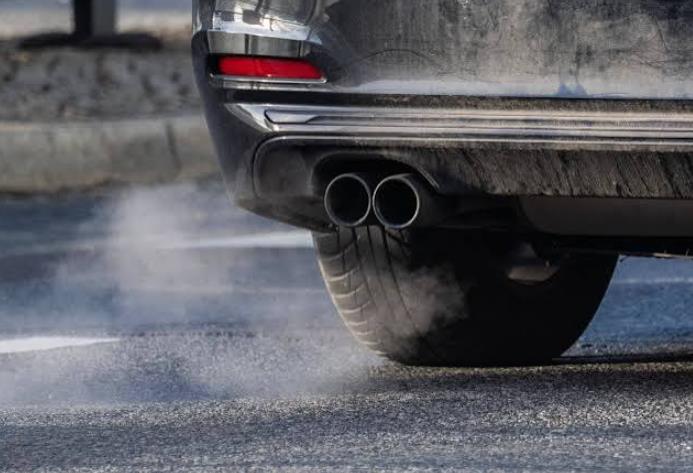
The European Union’s decision to effectively ban the sale of new gasoline and diesel cars by 2035 marks one of the most ambitious regulatory shifts in modern automotive history. As of 2026, this policy is no longer a distant proposal—it is actively reshaping the automotive industry, influencing consumer behavior, accelerating electric vehicle adoption, and forcing governments, manufacturers, and infrastructure providers to rethink transportation at every level.
To understand what this ban truly means in 2026, it is essential to examine its origins, the regulatory framework behind it, the current state of implementation, and the real-world consequences unfolding across Europe and beyond. While the policy is often summarized as a “ban,” the reality is more nuanced: it is a structural transition toward zero-emission mobility driven by climate goals, industrial strategy, and technological change.
The Policy Behind the 2035 Ban
The foundation of the 2035 combustion engine phase-out comes from the European Union’s broader climate strategy under the European Green Deal, led by the European Commission and supported by all 27 member states of the EU.
In 2023, the EU formally agreed that from 2035 onward, all new cars and vans sold must produce zero CO₂ emissions at the tailpipe. In practical terms, this eliminates traditional internal combustion engine (ICE) vehicles running on gasoline or diesel unless they are powered by synthetic e-fuels that meet strict carbon neutrality requirements.
The goal is aligned with the EU’s legally binding target of achieving climate neutrality by 2050. Transportation currently accounts for roughly one-quarter of the EU’s greenhouse gas emissions, and passenger cars represent the largest share within that sector.
By 2026, this regulation is no longer theoretical. It has moved into the implementation phase, where manufacturers are redesigning product lines, governments are building infrastructure, and consumers are beginning to shift expectations about what a “normal car” looks like.
What “Ban” Actually Means in Practice
Despite widespread media headlines, the EU policy is not a sudden prohibition on driving gasoline cars. Instead, it is a supply-side restriction on new vehicle sales.
In 2035:
- New gasoline and diesel cars will no longer be registered for sale
- Existing combustion vehicles will still be allowed to operate
- Second-hand ICE vehicle markets will continue
- Exceptions may exist for synthetic fuel vehicles, depending on regulatory approval
This distinction is critical in 2026 because it shapes how the transition is unfolding. Consumers are not being forced to abandon existing vehicles, but they are being gradually guided away from purchasing new internal combustion models.
By 2026, this has already influenced manufacturer strategies, with many automakers announcing accelerated phase-out plans that go even beyond EU requirements.
The Automotive Industry in 2026: A Sector in Transition
The automotive industry in 2026 is undergoing one of the fastest structural transformations in its history. Major manufacturers operating in the European market are reallocating investment away from combustion engines and toward electrification, software-defined vehicles, and battery technology.
Three major trends define the industry landscape:
First, electrification is no longer optional. Most manufacturers have already committed to ending internal combustion engine development within the next decade. Even brands that were previously cautious have introduced aggressive EV portfolios due to regulatory pressure and competitive necessity.
Second, platform consolidation is accelerating. Instead of developing separate architectures for gasoline, hybrid, and electric vehicles, manufacturers are shifting toward unified EV platforms. This reduces cost and increases production efficiency but also accelerates the decline of combustion engineering expertise.
Third, software has become a core competitive factor. Modern electric vehicles are increasingly defined by digital ecosystems, including over-the-air updates, autonomous driving capabilities, and integrated energy management systems.
By 2026, these trends are already visible in showroom lineups across Europe, where electric vehicles are no longer niche products but central offerings.
Consumer Behavior in 2026
Consumer adoption of electric vehicles in Europe has significantly accelerated by 2026, but it remains uneven across countries.
Northern and Western European markets such as Norway, the Netherlands, Germany, and France show strong EV penetration rates. In these regions, charging infrastructure is relatively mature, government incentives have been consistent, and urban density supports electrification.
In contrast, Southern and Eastern European markets are transitioning more slowly due to infrastructure gaps, lower average incomes, and limited policy enforcement capacity.
Consumer decision-making in 2026 is shaped by several key factors:
Range confidence remains important, although less critical than in earlier years. Most new EVs now offer real-world ranges exceeding 400 kilometers, reducing “range anxiety” for daily use.
Charging availability is becoming a decisive factor. Urban residents with access to home or workplace charging are significantly more likely to adopt EVs than those relying on public infrastructure.
Total cost of ownership is increasingly favorable for EVs, particularly as battery prices continue to decline and electricity pricing stabilizes relative to fossil fuels.
However, affordability remains a barrier. While EV prices have decreased, they still often carry a premium compared to entry-level gasoline vehicles, especially in smaller vehicle segments.
Infrastructure Development Across Europe
One of the most important dimensions of the 2035 transition is infrastructure. As of 2026, Europe is undergoing rapid expansion of its charging network, supported by both public investment and private sector participation.
Highway fast-charging corridors are being developed across major trans-European routes, enabling long-distance electric travel. Urban charging density is also increasing, particularly in cities implementing low-emission zones.
However, challenges remain. Grid capacity is becoming a critical issue in several regions. Local electricity distribution networks must be upgraded to handle increased demand from widespread EV charging. This requires not only physical infrastructure investment but also regulatory coordination between energy and transport sectors.
In addition, rural areas continue to face slower deployment rates, creating a potential divide between urban and rural mobility access.
Hydrogen infrastructure, once considered a parallel solution, has seen slower-than-expected adoption in passenger vehicles, although it remains relevant for heavy-duty transport.
The Role of Hybrid Vehicles in 2026
Hybrid vehicles occupy a transitional role in the EU’s roadmap. In 2026, they are still widely available and serve as a bridge technology between combustion engines and full electrification.
However, their long-term future is increasingly uncertain. While hybrids reduce emissions compared to traditional ICE vehicles, they do not meet the zero-emission requirement for 2035 compliance unless paired with fully carbon-neutral fuels.
As a result, manufacturers are gradually shifting hybrid offerings toward plug-in hybrid systems with extended electric-only ranges. Even so, regulatory momentum suggests that hybrids are ultimately a temporary solution rather than a long-term endpoint.
Synthetic Fuels: A Controversial Exception
One of the most debated aspects of the EU’s policy is the potential role of synthetic fuels, often referred to as e-fuels. These fuels are produced using captured carbon dioxide and renewable energy, theoretically creating a carbon-neutral combustion process.
In 2026, synthetic fuels remain expensive and limited in production capacity. However, they are politically significant because they offer a potential pathway for preserving internal combustion engines in niche applications such as performance cars, classic vehicles, and specific industrial uses.
The EU has indicated that vehicles running exclusively on certified carbon-neutral fuels may still be allowed under strict regulatory conditions. However, widespread use in mass-market passenger cars remains economically unlikely in the near term.
Economic and Industrial Impacts
The transition to zero-emission vehicles is reshaping Europe’s industrial base. The automotive sector is one of the largest employers in the EU, and the shift away from combustion engines has significant implications for manufacturing, supply chains, and labor markets.
Battery production has become a strategic priority. Europe is investing heavily in domestic battery manufacturing to reduce dependence on external suppliers and secure supply chains for critical minerals.
At the same time, traditional engine manufacturing jobs are declining, requiring workforce retraining programs and industrial restructuring initiatives.
New economic opportunities are emerging in software development, energy storage systems, charging infrastructure deployment, and grid management technologies.
By 2026, the transition is no longer just environmental—it is a central pillar of European industrial policy.
Environmental Impact and Emissions Progress
The primary goal of the 2035 ban is emissions reduction, and early indicators in 2026 suggest measurable progress.
Transport-related CO₂ emissions in the EU have begun to decline more consistently, although the pace varies by region. The increasing share of electric vehicles in new car sales is gradually shifting the overall fleet composition, even though full turnover will take decades.
The environmental benefit is not limited to tailpipe emissions. The transition also reduces urban air pollution, particularly nitrogen oxides and particulate matter, which have direct health impacts in densely populated cities.
However, the environmental equation is complex. Battery production requires significant energy and raw materials, raising concerns about lifecycle emissions and resource sustainability. The net benefit of EV adoption depends heavily on the decarbonization of Europe’s electricity grid, which is also progressing but uneven.
Global Implications Beyond Europe
The EU’s 2035 combustion engine phase-out has global ripple effects. Because Europe is one of the largest automotive markets in the world, its regulatory decisions influence global product planning.
Manufacturers that operate globally cannot maintain separate production strategies for Europe and other regions. As a result, the EU timeline is accelerating electrification plans worldwide.
Countries outside Europe are also observing the transition closely. Some have adopted similar targets, while others are adopting a slower or more flexible approach. Nevertheless, the EU remains a key regulatory driver shaping global automotive strategy.
What It Means for 2026 Specifically
In 2026, the significance of the EU ban is not the final outcome in 2035, but the irreversible momentum it has already created.
It means that:
- Gasoline car development is in long-term decline
- EVs are becoming mainstream rather than alternative
- Infrastructure investment is accelerating across Europe
- Automotive competition is shifting toward software and energy systems
- Consumers are increasingly making long-term mobility decisions based on electrification
Most importantly, 2026 represents a tipping point year. The transition is no longer speculative. It is operational, visible, and economically embedded.
The EU’s decision to ban new gasoline and diesel car sales by 2035 represents a structural transformation of the transportation sector. While the policy is often discussed in future terms, its real impact is already being felt in 2026 across industry strategy, consumer behavior, infrastructure development, and global automotive markets.
Rather than a sudden disruption, the transition is a phased evolution that gradually redefines mobility. The internal combustion engine is not disappearing overnight, but its role is steadily diminishing as electric vehicles become the dominant technology platform.
In 2026, the message is clear: the future of European mobility is already in motion, and the path toward zero-emission transportation is no longer optional—it is the direction of the entire system.

Leave a Reply