 Trusted Car Reviews, News & Buying Advice.
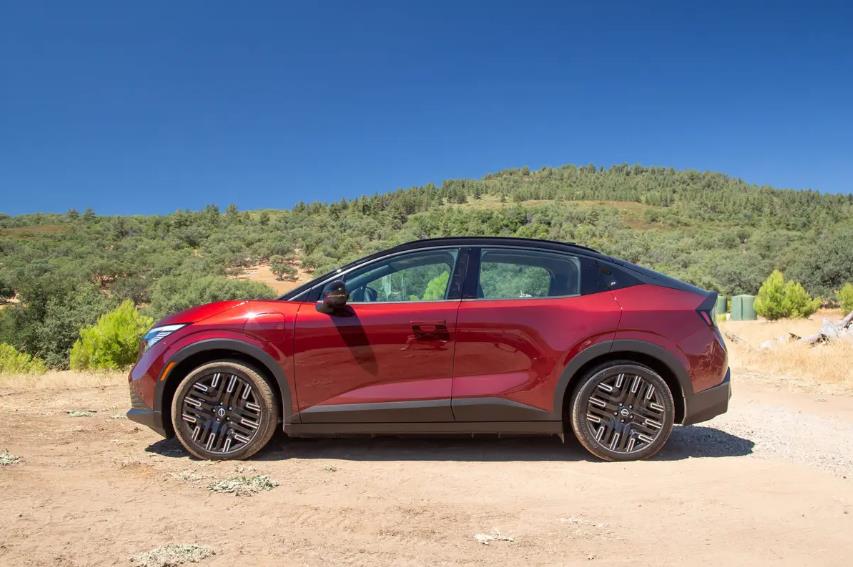
The 2026 Nissan Leaf represents a major evolution in Nissan’s flagship electric vehicle (EV) lineup. As one of the earliest mass-market EVs, the Leaf has continually influenced the industry, but in the past few years, competitors like Tesla, Volkswagen, Hyundai, and Kia have raised the bar. Nissan’s latest iteration responds to this challenge with longer range, enhanced technology, refined design, and improved driving dynamics, making it a compelling choice for families, city commuters, and first-time EV buyers in Europe and North America.
This review dives deep into every aspect of the 2026 Leaf — from exterior styling and interior tech to driving experience, range, charging, safety, and real-world usability — providing insights for informed buyers.
Introduction & Market Position
Since its introduction in 2011, the Nissan Leaf has been a pioneer in electric mobility. However, the first and second generations were limited by range, power, and outdated tech. The 2026 Leaf addresses these concerns with substantial improvements:
- Battery Options: Up to 75 kWh long-range battery.
- Range: Up to 303 miles (EPA).
- Technology: Dual touchscreens, ProPILOT Assist, smartphone connectivity, OTA updates.
- Pricing: Remains accessible compared to competitors.
Target Audience:
- Urban commuters looking for a practical EV.
- Small families requiring space and comfort.
- Budget-conscious buyers who want high-tech EV features without paying Tesla prices.
Competitors:
- Volkswagen ID.3 / ID.4
- Hyundai Ioniq 5
- Kia EV4
- Entry-level Tesla Model 3
Positioning Insight:
The Leaf balances practicality, affordability, and modern EV tech. It may not compete for outright performance but excels in value-for-money and usability, making it a top contender in the mainstream EV segment.
Exterior Design & Build Quality
The 2026 Leaf abandons the traditional hatchback silhouette in favor of a more aerodynamic, crossover-inspired profile. Key features:
- Front: V-motion grille, slim LED headlights, modern bumper design.
- Side: Flowing character lines, flush door handles, aerodynamic wheel designs (17–18 inch options).
- Rear: Floating LED tail lights, fastback roofline enhancing aerodynamic efficiency.
Design Highlights Table:
| Feature | Description |
|---|---|
| Headlights | Full LED, slim design |
| Grille | V-motion, closed for better aerodynamics |
| Wheels | 17–18 inches, aerodynamic options |
| Drag Coefficient | 0.28 Cd (improved from previous generation) |
| Exterior Colors | Multi-color options with contrast roof |
Observation:
The Leaf’s exterior feels more mature and premium, aligning with current market trends favoring small EV crossovers. While the fastback roof slightly reduces rear headroom, overall interior space remains competitive.
Interior & Technology
Nissan has significantly upgraded the cabin with modern materials, improved ergonomics, and advanced technology.
Key Features:
- Dual touchscreens (10–12 inch main display + digital cluster).
- Wireless Apple CarPlay and Android Auto.
- Google Built-in (navigation and apps) on higher trims.
- Wireless charging, multiple USB-C ports.
- Optional panoramic sunroof on upper trims.
- Premium Bose audio system in Platinum+ trim.
Interior Space Table:
| Feature | 2026 Leaf |
|---|---|
| Front Headroom | 39.5 inches |
| Rear Headroom | 38.0 inches |
| Front Legroom | 42.0 inches |
| Rear Legroom | 37.2 inches |
| Cargo Volume | 23.6 cu ft (rear seats up) |
The cabin emphasizes usability and comfort, with intuitive layouts and responsive screens. Rear passengers benefit from generous legroom, and the interior feels airy and spacious despite the compact footprint.
Powertrain & Driving Dynamics
The 2026 Leaf offers two powertrain options depending on trim:
| Trim | Battery | Power (hp) | Torque (lb-ft) | EPA Range (miles) |
|---|---|---|---|---|
| S (Entry) | 52 kWh | 174 | 254 | ~226 |
| S+/SV+/Platinum+ | 75 kWh | 214 | 261 | 303 |
Driving Impressions:
- Smooth and linear acceleration, ideal for city and highway driving.
- FWD layout; no AWD option.
- Suspension tuned for comfort — absorbs bumps efficiently without compromising handling.
- Steering precise, making urban maneuvers easy.
- Noise insulation is improved; wind and tire noise kept minimal at highway speeds.
Acceleration & Performance Table:
| Metric | 2026 Leaf S+ | Notes |
|---|---|---|
| 0–60 mph | ~7.5 sec | Moderate performance, adequate for everyday driving |
| Top Speed | 100 mph | Limited for city/highway use, not for performance enthusiasts |
| Braking | Linear, stable | Regenerative braking adjustable via paddle shifter |
| Cornering | Stable, comfortable | Not sporty, but safe |
Range & Charging
Range and charging improvements are among the Leaf’s strongest selling points.
| Feature | Specification |
|---|---|
| Max EPA Range | 303 miles (S+) |
| DC Fast Charging | 150 kW, 10–80% in ~35 min |
| Level 2 Charging | 7.2 kW onboard charger |
| Charging Ports | J1772 (AC), NACS (DC Tesla compatible) |
Key Observations:
- Fast-charging significantly reduces downtime for long trips.
- Dual-port design allows flexibility across Tesla Superchargers and standard AC stations.
- Level 2 charging sufficient for overnight home charging.
Comparison With Competitors Table:
| Model | Battery | Range (EPA) | Fast Charge | Price (USD) |
|---|---|---|---|---|
| Nissan Leaf S+ | 75 kWh | 303 mi | 150 kW | 31,485 |
| Volkswagen ID.3 | 77 kWh | 260 mi | 125 kW | 34,000 |
| Hyundai Ioniq 5 | 77 kWh | 303 mi | 220 kW | 39,000 |
| Tesla Model 3 (Standard) | 60 kWh | 272 mi | 170 kW | 37,000 |
Safety & Driver Assistance
The Leaf continues Nissan’s tradition of strong safety focus:
- ProPILOT Assist: Adaptive cruise + lane-keeping assist.
- Automatic Emergency Braking, Blind-Spot Monitoring, Rear Cross Traffic Alert.
- Multiple airbags, reinforced safety cage.
- Expected to perform well in IIHS, NHTSA, and EURO NCAP testing.
Safety Features Table:
| Feature | Standard / Optional |
|---|---|
| ProPILOT Assist | Standard on SV+ and Platinum+ |
| Blind Spot Monitoring | Standard |
| Lane Departure Warning | Standard |
| Rear Cross-Traffic Alert | Standard |
| Automatic Emergency Braking | Standard |
Ownership Costs & Practicality
- Maintenance: EV simplicity reduces routine maintenance; no oil changes, fewer moving parts.
- Electric Cost: Significantly lower than fuel costs, especially for city commuters.
- Battery Life: Nissan offers standard warranty of 8 years / 100,000 miles.
- Real-World Use: Cargo space and rear seating make Leaf practical for grocery trips, school runs, and weekend getaways.
Cost Comparison Table (Approximate Annual Costs, USD):
| Expense | Nissan Leaf | Gas Car Equivalent |
|---|---|---|
| Electricity / Fuel | 500 | 1,400 |
| Maintenance | 300 | 800 |
| Insurance | 1,200 | 1,200 |
| Total | 2,000 | 3,400 |
Pricing & Trim Levels
| Trim | MSRP (USD) |
|---|---|
| S+ | 31,485 |
| SV+ | 35,725 |
| Platinum+ | 40,485 |
Even at higher trims, value remains strong, especially when compared to rivals offering similar tech and range. The Leaf stands out for its affordability, low running cost, and broad appeal.
Strengths & Weaknesses
Strengths:
- Long-range EV with up to 303 miles.
- Flexible charging options (AC + Tesla-compatible DC).
- Comfortable interior and practical space.
- Affordable compared to competitors.
Weaknesses:
- Moderate performance; no AWD.
- Level 2 charging slower than some rivals.
- Interior design is functional but not luxury-level.
The 2026 Nissan Leaf solidifies Nissan’s place in the mainstream EV market. It balances range, affordability, tech, and practicality in a way that appeals to city commuters, small families, and first-time EV buyers. While it does not compete with high-performance electric vehicles, it delivers exceptional everyday usability. With charging flexibility, comfort, and smart technology, the Leaf is a practical, forward-looking EV for the modern driver.
For those who prioritize reliability, cost-effectiveness, and real-world usability over pure speed, the 2026 Leaf emerges as a top choice in the growing electric vehicle market.



Leave a Reply