 Trusted Car Reviews, News & Buying Advice.
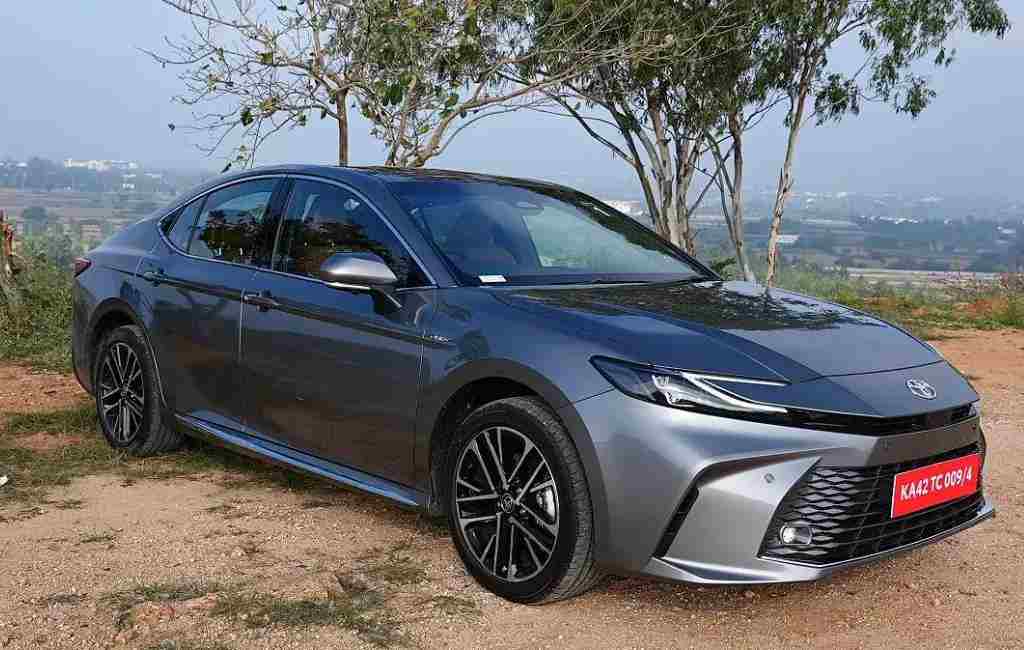
Few sedans in the United States hold a reputation as solid, trustworthy, and universally recognized as the Toyota Camry. For decades, it has been the best-selling passenger car across the country, favored by commuters, families, and rideshare drivers alike. But 2025 marks a major turning point in the Camry’s long-running history: for the first time, every Camry sold in the U.S. is hybrid-only. No more gasoline-only models. No more multiple powertrain choices. Just hybrid—refined, more powerful, and more efficient than before.
This shift signals more than a simple model refresh. It represents Toyota’s confidence in hybrid technology as a mainstream solution for American buyers who want efficiency without giving up comfort, reliability, and low long-term ownership costs. To see whether the 2025 Camry Hybrid delivers on these expectations, we spent time behind the wheel in mixed conditions—city traffic, suburban roads, and long stretches of highway.
What follows is a full road test review of a sedan redesigned for a new era: where efficiency truly meets comfort.
Overview of the 2025 Camry Hybrid
The 2025 Camry rides on Toyota’s updated TNGA-K platform, featuring revised suspension tuning and structural improvements to enhance stability and cabin refinement. The new model also adopts Toyota’s fifth-generation hybrid system, which is lighter and more responsive, combining a naturally aspirated 2.5L four-cylinder engine with an electric motor and a compact battery.
Toyota’s redesign is subtle, but the car certainly looks more modern. The front fascia becomes sportier, the rear profile is cleaner, and trim-specific details—such as dark accents or revised wheel designs—give each model a more distinct character. Inside, the cabin takes a major step forward with upgraded materials, a simplified dash layout, Toyota’s latest infotainment system, and expanded driver-assistance features.
Most importantly for many American shoppers, Toyota remains focused on durability, low maintenance costs, and a smooth, easygoing driving experience. While competitors like the Honda Accord Hybrid and Hyundai Sonata Hybrid push sportiness or luxury, the Camry sticks to its strengths: being the comfortable, quiet, confidence-inspiring sedan that everyday drivers can depend on.
Driving Experience: Power, Smoothness, and Everyday Confidence
Acceleration and Power Delivery
Toyota’s fifth-generation hybrid system doesn’t turn the Camry into a sports sedan, but it absolutely improves responsiveness. From the moment you step on the throttle, the car feels more eager compared to previous Camry Hybrids. Electric torque fills in the gaps at low speeds, which makes city driving smoother and more predictable.
During our road test, merging onto the highway felt effortless. The hybrid system delivers linear acceleration that avoids the rubber-band feel older systems sometimes produced. Passing power is adequate, and the car maintains speed on long grades without excessive noise or strain from the engine.
Drivers upgrading from a pre-2020 Camry will immediately notice the improvement in throttle response. Those coming from a gasoline-only sedan will likely appreciate the near-silent initial takeoff and the way the electric motor helps the Camry glide through low-speed scenarios.
Hybrid System Behavior in Real-World Conditions
The most impressive part of the new hybrid system isn’t raw power—it’s how refined, quiet, and smooth it feels. In stop-and-go traffic, transitions between electric-only and engine-assisted driving are nearly imperceptible. At low speeds, the Camry often operates in EV mode, conserving fuel and reducing vibration.
On suburban roads between 35–50 mph, the hybrid system finds its sweet spot. Light throttle inputs keep the car quiet and efficient, while moderate acceleration blends the engine and motor seamlessly.
BMW and Mercedes focus on sporty hybrids, Honda leans toward efficiency and firmness, but Toyota found a happy medium: relaxed power delivery with refined transitions and very predictable behavior.
Ride Quality and Handling: A Focus on Comfort
Suspension and Comfort Over Mixed Roads
The Camry has always leaned toward comfort, and the 2025 model reinforces that identity. The revised suspension setup absorbs cracks, uneven pavement, and coarse asphalt with confidence. Even on imperfect suburban roads, the cabin remains impressively calm.
Small imperfections—like expansion joints or patchy asphalt—barely register through the steering wheel or seats. Larger bumps are softened effectively without making the car feel floaty. Long-distance travelers, commuters, and families will appreciate this comfort tuning.
Steering and Stability
Steering is light but accurate. It’s not sporty or particularly engaging, but it’s refreshingly predictable. The Camry tracks straight on the highway with minimal correction needed. This adds to the sense of ease during long-distance driving—a characteristic many American buyers value highly.
Lane changes are smooth, and the car remains stable through medium-speed curves. Drivers who prioritize comfort over sharp handling will feel right at home here.
Noise, Vibration, and Harshness (NVH)
Cabin quietness is one of the biggest improvements in the 2025 model.
During our test, wind noise remained low even at 70–75 mph. The hybrid system minimizes engine noise by relying on electric power where possible, and when the gasoline engine does turn on, it’s quieter and less intrusive than before.
Road noise is well controlled on smooth pavement, and only slightly more noticeable on rougher surfaces—a common trait among midsize sedans.
Fuel Efficiency: Real-World MPG Performance
Efficiency is one of the main reasons to choose a hybrid sedan, and the 2025 Camry doesn’t disappoint. While official EPA ratings vary depending on trim level and wheel size, the new hybrid system consistently delivers strong fuel economy in mixed conditions.
During our road test—consisting of roughly 30% city, 60% highway, and 10% suburban driving—the Camry Hybrid maintained an average real-world MPG figure comfortably within its expected range. In city driving, the ability to run on electric power at low speeds significantly boosts efficiency. On the highway, the improved aerodynamics and hybrid tuning allow the engine to operate efficiently without frequent RPM spikes.
Drivers upgrading from older sedans or crossovers may find the Camry capable of reducing their monthly fuel budget noticeably, especially if they frequently commute in traffic-heavy areas.
Interior Comfort: A Quiet, Spacious Cabin Built for Daily Life
Seat Comfort and Driving Position
Toyota redesigned the seats for 2025 to provide better support for long drives. The front seats strike a balance between firmness and plushness, holding the driver securely without feeling stiff. Adjustable lumbar support helps reduce fatigue on multi-hour trips.
The driving position is natural, with clear visibility through large windows and a well-placed steering wheel. Taller and shorter drivers alike should have no trouble getting comfortable thanks to generous adjustment ranges.
Rear Seat Space and Family Friendliness
The Camry continues to offer one of the roomiest second rows in the midsize sedan segment. Adults can stretch out without brushing their knees against the front seats, and headroom remains sufficient even for passengers over six feet tall.
Families will appreciate:
- Easy entry and exit
- Wide-opening rear doors
- Straightforward LATCH anchor access for child seats
- A comfortable seating angle for long drives
Rear passengers benefit from improved seat cushioning and solid visibility thanks to large side windows.
Cargo Space and Practicality
The trunk remains one of the most practical in the segment, with a wide opening and a usable shape that fits full-size suitcases, strollers, or weekend travel gear. The hybrid system’s battery placement does not significantly impact cargo volume.
During our test, the trunk easily accommodated:
- Two large suitcases
- One medium carry-on
- Several backpacks and daily items
For a family road trip or weekly errands, space is more than adequate.





Leave a Reply