 Trusted Car Reviews, News & Buying Advice.
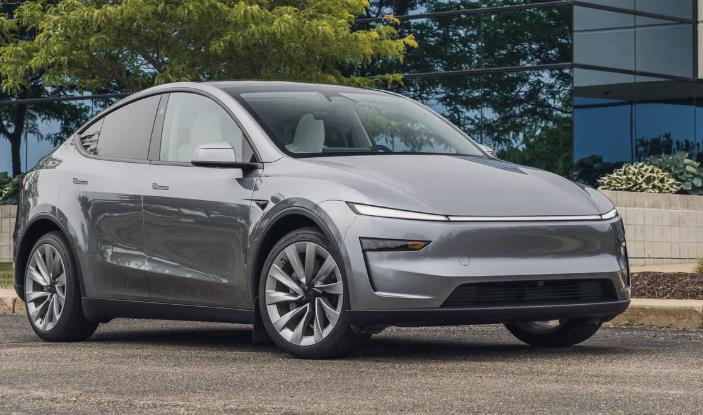
The Tesla Model Y has been one of the most influential electric vehicles of the past decade, shaping not only the compact electric SUV segment but also redefining what mainstream buyers expect from EV performance, software integration, and charging infrastructure. With the 2026 Tesla Model Y refresh arriving into a market that is far more competitive than when it first launched, the question is no longer whether it is a good electric SUV. The real question is whether it still deserves its reputation as the default choice in a rapidly evolving EV landscape.
The refresh brings subtle but meaningful improvements rather than a radical redesign. That approach reflects Tesla’s broader strategy in recent years: continuous iteration rather than generational overhaul. However, in 2026, competitors from both legacy automakers and new EV-focused brands are no longer playing catch-up. Many now match or exceed Tesla in build quality, interior refinement, ride comfort, and in some cases even software experience. This makes the updated Model Y a more complex product to evaluate than earlier versions.
Design Evolution: Familiar Shape, Refined Details
At first glance, the 2026 Model Y refresh does not dramatically depart from its predecessor. The silhouette remains instantly recognizable, maintaining its coupe-inspired SUV profile with a high aerodynamic efficiency focus. This consistency is intentional, as Tesla continues to prioritize efficiency and manufacturing scalability over frequent aesthetic reinvention.
However, closer inspection reveals a series of refinements that modernize the vehicle. The front fascia has been subtly reshaped to improve airflow efficiency and reduce drag, contributing to incremental range improvements. The lighting signature has been updated with a sharper, more precise LED design that aligns the Model Y visually with newer Tesla models.
At the rear, the changes are more noticeable. The taillight design is slimmer and more horizontally stretched, giving the vehicle a wider visual stance. These updates are not merely cosmetic; they reflect Tesla’s ongoing aerodynamic optimization efforts, which remain a key advantage in real-world range performance.
Despite these updates, the Model Y still leans heavily on familiarity. For buyers expecting a bold redesign, the refresh may feel conservative. But for Tesla, consistency is part of the strategy. Manufacturing efficiency, part sharing, and global production scalability remain central to the Model Y’s dominance.
Interior: Minimalism Evolved, Not Revolutionized
Inside the cabin, the 2026 Model Y continues Tesla’s commitment to extreme minimalism, though refinements make it feel more polished than earlier versions. The central touchscreen remains the primary interface for nearly all vehicle functions, reinforcing Tesla’s software-first philosophy.
The materials quality has improved modestly. Soft-touch surfaces are more widely used across high-contact areas, and panel fit consistency has been improved compared to earlier production years. However, the cabin still does not aim to compete directly with premium German SUVs in traditional luxury feel. Instead, Tesla continues to prioritize digital experience over tactile opulence.
One of the most notable upgrades is the improved ambient lighting system. It is more customizable and integrated more seamlessly into the dashboard architecture, adding subtle depth to the otherwise minimalist interior. The redesigned center console also improves storage usability, addressing one of the more common criticisms of earlier Model Y versions.
Seating comfort has been refined, particularly for long-distance driving. The updated cushioning and ergonomic adjustments make a noticeable difference on extended trips, although some competitors still offer more supportive seating for luxury-focused buyers.
Rear passenger space remains one of the Model Y’s strongest advantages. The flat floor design, generous headroom, and panoramic glass roof continue to make it feel more spacious than many competitors in the same segment.
Technology and Software: Still Tesla’s Strongest Weapon
The most defining characteristic of the 2026 Model Y refresh remains its software ecosystem. Tesla continues to treat the vehicle as a continuously evolving digital platform rather than a static product.
The latest iteration of the infotainment system is faster, more responsive, and more intuitive. UI refinements reduce the number of steps required for common functions, and voice control has become significantly more reliable compared to earlier generations. Over-the-air updates remain a core advantage, allowing the vehicle to improve over time without requiring dealership visits.
Autopilot functionality has also been incrementally improved. While it is not a fully autonomous system, the latest version demonstrates better lane-keeping stability, smoother adaptive cruise behavior, and improved decision-making in complex highway environments. In urban settings, however, the system still requires driver supervision and is not yet a replacement for human attention.
One of the most significant trends in 2026 is the growing expectation for advanced driver assistance systems to feel natural and predictable. Competitors have narrowed the gap, and in some regions, rival systems now offer comparable or even smoother lane-centering behavior. Tesla’s advantage lies less in raw capability and more in ecosystem integration and continuous improvement.
Entertainment features also continue to expand. The gaming platform, streaming integration, and passenger-focused entertainment options make the Model Y feel more like a connected device than a traditional car. This aligns strongly with younger buyers who value digital experiences as much as driving dynamics.
Performance: Balanced, Efficient, and Predictable
The 2026 Model Y refresh maintains Tesla’s established performance philosophy: instant torque, linear acceleration, and efficiency-first tuning. Depending on the configuration, acceleration remains competitive within the compact electric SUV segment, with the dual-motor variants delivering particularly strong mid-range responsiveness.
However, performance in 2026 is no longer a unique selling point in the way it once was. Several competitors now offer similar acceleration figures, and some performance-oriented electric SUVs exceed the Model Y in outright speed. Tesla’s advantage lies in consistency and efficiency rather than headline numbers.
Handling remains predictable and stable, with a low center of gravity contributing to confident cornering. Steering feedback is still somewhat artificial compared to traditional performance vehicles, but improvements in software calibration have made it more natural than earlier iterations.
Where the Model Y continues to stand out is efficiency. Even with increasing competition, it remains one of the most energy-efficient vehicles in its class, translating into strong real-world range performance.
Range and Charging: The Practical Advantage
Range remains one of the Model Y’s most important strengths in 2026. The refresh benefits from aerodynamic improvements and drivetrain efficiency refinements, resulting in modest but meaningful gains in real-world driving range.
However, the bigger advantage is not just range itself, but the charging ecosystem. Tesla’s Supercharger network continues to be one of the most reliable and widespread fast-charging infrastructures available. Even as other charging networks expand rapidly, Tesla’s network remains a major differentiator in terms of uptime, ease of use, and consistent charging speeds.
For long-distance travel, this ecosystem advantage cannot be overstated. While many competitors now offer similar or slightly higher peak charging speeds on paper, real-world reliability and accessibility still favor Tesla in many regions.
That said, the industry is changing quickly. In 2026, more automakers are adopting standardized charging systems and expanding partnerships with major charging providers. The gap is narrowing, even if Tesla still holds an edge in user experience.
Ride Comfort and Driving Experience: A Key Area of Debate
One of the most frequently discussed aspects of the Model Y has always been ride comfort. Earlier versions were often criticized for being too firm, particularly on rough urban roads. The 2026 refresh addresses this to some extent with revised suspension tuning and improved damping characteristics.
The result is a more balanced ride that better absorbs road imperfections without sacrificing handling stability. However, it still leans toward a sporty, firm setup rather than a plush luxury feel. Buyers seeking maximum comfort may still prefer competing models that prioritize ride softness over responsiveness.
Noise insulation has also been improved. Cabin noise at highway speeds is reduced thanks to better sealing and acoustic glass enhancements. While not class-leading in absolute terms, the improvement is noticeable and contributes to a more refined driving experience.
The overall driving feel remains distinctly Tesla: smooth, quiet, and software-enhanced. Regenerative braking continues to be one of the most refined systems in the segment, allowing for near one-pedal driving in most conditions.
Market Competition in 2026: The Pressure Is Real
The biggest factor influencing the perception of the 2026 Model Y refresh is not the vehicle itself, but the market around it. The electric SUV segment has become one of the most competitive automotive categories globally.
Legacy automakers have significantly improved their EV offerings, focusing on interior quality, ride comfort, and traditional luxury appeal. Meanwhile, newer EV-focused brands are pushing innovation in battery technology, charging speed, and user experience.
In this environment, the Model Y’s strengths and weaknesses are more visible than ever. Its strengths include software integration, charging ecosystem, efficiency, and proven reliability. Its weaknesses include conservative interior design, firm ride characteristics, and less emphasis on traditional luxury materials.
As a result, the Model Y no longer dominates purely by default. Instead, it competes on a more level playing field where buyer priorities matter more than brand momentum.
Ownership Experience: Software Updates as a Long-Term Value Factor
One of the most important but often overlooked aspects of owning a Model Y is the long-term software experience. Unlike traditional vehicles that remain largely unchanged after purchase, Tesla vehicles evolve significantly over time.
Feature updates, performance optimizations, and user interface improvements continue to arrive years after purchase. This creates a dynamic ownership experience where the vehicle feels progressively more modern rather than aging.
However, this advantage also depends on how much value a buyer places on software evolution. Some owners prefer stable, unchanging systems, while others appreciate continuous improvement. Tesla clearly targets the latter group.
Maintenance costs also remain relatively low compared to internal combustion vehicles, due to fewer moving parts and simplified drivetrain architecture. This continues to be a major factor in total cost of ownership calculations.
Final Verdict: Is the 2026 Model Y Refresh Still Worth It?
The 2026 Tesla Model Y refresh is not a revolutionary reinvention, but it does not need to be. Instead, it represents a refinement of an already highly successful formula in a market that is far more competitive than when it first launched.
It remains one of the most efficient, technologically advanced, and software-driven electric SUVs available. Its strengths in charging infrastructure, over-the-air updates, and real-world usability continue to make it an extremely practical choice for a wide range of buyers.
However, it is no longer the uncontested leader. Buyers now have more choices than ever, and some of those alternatives offer superior comfort, more luxurious interiors, or more specialized performance characteristics.
The decision ultimately depends on priorities. If software integration, charging convenience, efficiency, and long-term digital evolution matter most, the Model Y remains a very strong contender in 2026. If interior luxury, ride softness, or traditional craftsmanship are higher priorities, there are increasingly compelling alternatives.
In the end, the 2026 Model Y refresh reinforces a simple reality: Tesla is no longer defining the electric SUV category alone, but it is still one of the most influential players shaping its direction.





Leave a Reply