 Trusted Car Reviews, News & Buying Advice.
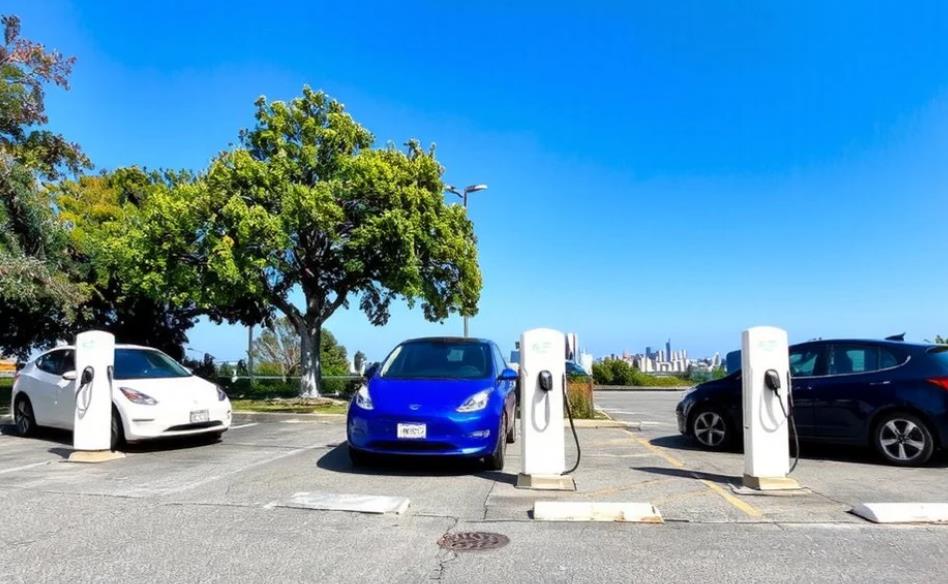
The rapid growth of electric vehicles across the United States has transformed charging infrastructure from a niche concern into a critical component of everyday mobility. For drivers considering the switch to EVs—or those already navigating the ecosystem—understanding charging networks, regional coverage, and real-world charging speeds is essential. This guide provides a comprehensive, up-to-date look at how charging works across major U.S. cities, what to expect in terms of performance, and how to plan efficiently for both daily use and long-distance travel.
Understanding the Types of EV Charging
Before diving into network coverage, it’s important to understand the three primary levels of EV charging available in the U.S.
Level 1 charging uses a standard 120V household outlet. It is the slowest option, typically adding 3 to 5 miles of range per hour. While widely accessible, it is generally only practical for overnight charging or very low daily mileage.
Level 2 charging operates on 240V power and is commonly found in homes, workplaces, and public locations such as shopping centers. It delivers 15 to 40 miles of range per hour, depending on the vehicle and charger capacity. This is the most common solution for daily charging needs.
DC fast charging, also known as Level 3, is the backbone of public charging networks for long-distance travel. These chargers can deliver anywhere from 50 kW to over 350 kW, enabling vehicles to recharge from 10% to 80% in as little as 15 to 40 minutes, depending on battery architecture and charging curve.
Major Charging Networks in the United States
The U.S. EV charging landscape is dominated by several key players, each offering different levels of coverage, reliability, and speed.
Tesla’s Supercharger network remains one of the most extensive and reliable systems. Originally exclusive to Tesla vehicles, many stations are now opening to other brands through the use of adapters or built-in compatibility. Superchargers typically deliver between 150 kW and 250 kW, with newer V4 stations aiming for even higher throughput.
Electrify America is one of the largest open networks, built as part of a regulatory settlement and now serving most major metro areas and highway corridors. Its stations often support ultra-fast charging up to 350 kW, making it a strong option for non-Tesla EVs.
ChargePoint operates a vast network of Level 2 chargers alongside a growing number of DC fast chargers. Its strength lies in urban and suburban coverage, particularly in commercial and workplace settings.
EVgo focuses heavily on fast charging in dense urban areas. It is particularly strong in cities like Los Angeles, San Francisco, and New York, where quick top-ups are essential for drivers without home charging.
Regional Coverage Across Major U.S. Cities
Charging availability varies significantly depending on geography, population density, and local EV adoption rates. Here’s how the landscape looks across key metropolitan areas.
California, especially Los Angeles and the San Francisco Bay Area, leads the nation in charging infrastructure. High EV adoption, strong policy support, and significant private investment have resulted in dense coverage. Drivers in these regions benefit from a wide mix of Level 2 and ultra-fast chargers, often within a few miles of any location.
New York City presents a different scenario. While the number of chargers is growing rapidly, space constraints and high demand can make availability inconsistent. However, public fast-charging hubs and curbside Level 2 installations are expanding, improving accessibility for urban residents.
Texas cities such as Austin, Dallas, and Houston are experiencing rapid growth in charging infrastructure. While not yet as dense as California, these cities are investing heavily in fast-charging corridors and suburban coverage, making EV ownership increasingly practical.
Chicago and other Midwest cities offer moderate coverage, with strong support along highways but less density within urban cores. However, continued investment is closing this gap.
In Florida, cities like Miami and Orlando benefit from growing networks, particularly along major highways. The state’s flat terrain and warm climate also contribute to favorable EV performance and range consistency.
Charging Speeds and Real-World Performance
Charging speed is one of the most misunderstood aspects of EV ownership. While chargers may advertise maximum outputs of 150 kW or 350 kW, actual charging speed depends on several factors.
Vehicle capability is the most important variable. Not all EVs can accept high charging rates. For example, some entry-level models may max out at 50 kW, while newer premium models can take full advantage of ultra-fast chargers.
Battery state of charge also plays a crucial role. Charging is fastest between roughly 10% and 60%, after which speeds taper off significantly to protect battery health.
Temperature can impact charging performance as well. Cold weather can reduce charging speed unless the battery is preconditioned, while extreme heat may also limit peak rates.
In real-world conditions, a typical DC fast-charging session adds 150 to 250 miles of range in about 30 minutes for modern EVs. However, planning for slightly longer stops ensures a smoother travel experience.
Highway Charging Corridors and Road Trips
Long-distance EV travel in the U.S. has improved dramatically over the past few years. Major interstate highways are now supported by fast-charging corridors, making cross-country trips more feasible than ever.
Routes such as I-95 on the East Coast, I-5 on the West Coast, and I-10 across the southern U.S. are well-equipped with fast chargers spaced roughly 50 to 100 miles apart. This spacing aligns with the range capabilities of most modern EVs.
Navigation systems and mobile apps have become essential tools for trip planning. Many vehicles now include built-in route planners that automatically factor in charging stops based on range, terrain, and traffic conditions.
Urban vs Suburban Charging Experience
The EV charging experience differs significantly between urban and suburban environments.
Urban drivers often rely on public infrastructure due to limited access to home charging. This makes network reliability, availability, and speed especially important. Fast-charging hubs and curbside Level 2 stations are key solutions in these areas.
Suburban drivers typically benefit from home charging setups, allowing them to start each day with a full battery. Public charging is used more for convenience or long-distance travel rather than daily necessity.
This distinction highlights the importance of infrastructure planning that addresses different user needs across regions.
Trends Shaping the Future of Charging Networks
Several trends are reshaping the EV charging landscape in 2026 and beyond.
The adoption of standardized connectors is improving interoperability across networks, reducing confusion and increasing accessibility for all drivers.
Ultra-fast charging technology continues to evolve, with new stations capable of delivering over 350 kW and reducing charging times even further.
Battery technology improvements, including higher energy density and faster charging capabilities, are making EVs more practical for a wider range of drivers.
Investment from both public and private sectors is accelerating infrastructure expansion, particularly in underserved regions.
Smart charging and load balancing technologies are also becoming more common, helping to manage grid demand and optimize energy use.
Practical Tips for EV Drivers
Understanding how to navigate charging networks can significantly improve the ownership experience.
Plan charging stops ahead of long trips, but remain flexible in case of station availability issues.
Use multiple apps or in-car systems to locate chargers, check real-time availability, and compare pricing.
Avoid charging to 100% on fast chargers unless necessary, as it is slower and less efficient.
Take advantage of home charging whenever possible, as it is typically more convenient and cost-effective.
Consider peak and off-peak electricity rates when charging at home or at public stations.
The EV charging network in the United States has reached a level of maturity that supports both daily commuting and long-distance travel for most drivers. While regional differences still exist, major cities and highway corridors are now well-equipped with a mix of Level 2 and DC fast chargers.
As infrastructure continues to expand and technology advances, charging will become faster, more reliable, and more accessible. For automotive enthusiasts, content creators, and everyday drivers alike, understanding these dynamics is essential to making informed decisions in the evolving electric mobility landscape.


Leave a Reply