 Trusted Car Reviews, News & Buying Advice.
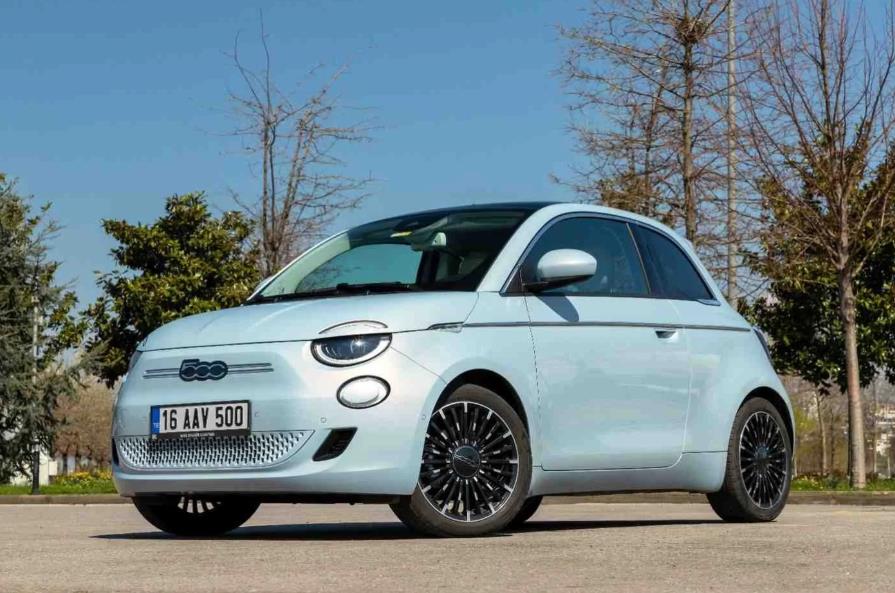
The small electric vehicle (EV) segment in Europe has shifted from niche curiosity to mainstream momentum in 2026. Urban congestion pricing, expanding zero‑emission zones, and tighter EU emissions legislation have disproportionately encouraged the adoption of compact EVs, making them a focal point of both consumer demand and industry strategy. Small electric cars are now valued not just for low running costs and tight turning radii but for sophisticated technology, usable range, and real-world practicality comparable to larger segments.
Europe’s overall EV market remains robust, with battery‑electric vehicles (BEVs) capturing about one‑fifth of new registrations early in 2026, up substantially from previous years. This growth underscores how demand patterns are evolving toward emissions‑free mobility, particularly in dense urban centers where small EVs shine.
Renault 5 E‑Tech
The Renault 5 E‑Tech is arguably the most significant small EV of 2026 in Europe. Combining a compact footprint with modern packaging, the Renault 5 has been a standout in the category, with strong sales performance and critical acclaim across several markets. Its playful yet modern design appeals to both urban buyers and the broader mainstream, while its efficient electric powertrain delivers competitive range and usability for daily commuting and weekend errands.
The Renault 5’s success reflects a growing trend toward vehicles that balance heritage design cues with contemporary tech and efficiency. It has been recognized in industry awards and continues to perform well in monthly sales charts, illustrating enduring appeal beyond early adopter demand.
Volkswagen ID.2all
Volkswagen’s ID.2all represents one of the most promising entries at the intersection of price, efficiency, and technology. With an expected starting price in the mid‑€20,000 range and an estimated WLTP range around 280 miles, the ID.2all positions itself as a contender for drivers who want a well-rounded small EV that doesn’t compromise on range or capability.
VW’s continued investment in compact electric platforms underscores a broader industry pivot back toward smaller segments. This strategic emphasis is increasingly necessary as European markets demand vehicles that are agile in dense cities yet capable of spirited highway use.
BYD Dolphin and BYD Dolphin Mini
Chinese EV maker BYD has made significant inroads into Europe with the BYD Dolphin, and its smaller Dolphin Mini variant is gaining traction amid price-sensitive buyers. These models combine strong energy efficiency, robust standard equipment levels, and pragmatic interior space for their class. European buyers have increasingly embraced non-traditional brands that offer value and strong battery tech, and BYD’s approach demonstrates how new entrants can disrupt legacy manufacturers.
BYD’s compact EVs also reflect broader market forces: rising competition, expanded public charging networks, and more diverse offerings have brought compelling alternatives to classic European hatchbacks and SUVs.
MG4 EV
The MG4 EV continues to be a value leader in 2026. Its blend of affordability, decent WLTP-rated range, and practical cargo space keeps it relevant against more recently launched competitors. While the MG4 straddles the boundary between “small” and “compact,” its strong value proposition resonates with young professionals and families alike.
MG4’s appeal is amplified in markets with fiscal incentives or salary sacrifice plans that improve leasing economics, making it a frequently recommended choice for cost-conscious buyers.
Kia EV2
The Kia EV2 is a noteworthy addition that targets the heart of Europe’s urban and suburban demand. Built on a compact version of the e-GMP architecture, it delivers a usable range up to around 440 km (WLTP) with the larger battery variant, fast charging capabilities, and advanced safety systems. Its modern design and strong equipment list have elevated Kia’s presence in small EV rankings.
The EV2’s arrival also signals how legacy brands are reallocating R&D from larger vehicles into more efficient, affordable platforms tailored to European priorities, including bidirectional charging and vehicle-to-grid (V2G) capabilities.
Broader Trends Shaping Small EV Adoption
Several macro trends define Europe’s 2026 small EV landscape. First, regulatory frameworks continue to push automakers toward electrification while managing cost pressures. More compact cars fit EU emission targets without the manufacturing complexity or material costs associated with larger battery packs.
Second, consumer expectations now extend beyond simple range figures. Buyers seek a combination of real-world usable range, charging behavior that holds up in diverse climates, and digital experiences integrated into the vehicle ecosystem. Platform maturity and improved battery management systems are reducing range anxiety while enhancing everyday usability.
Finally, the market sees a gradual balancing of legacy European brands and disruptive entrants from Asia and China. This competitive tension is advantageous for consumers, driving down prices and accelerating innovation, particularly in the compact segment where value and usability matter most.
The 2026 European small electric car rankings highlight a vibrant, competitive segment where heritage and innovation intersect. Models like the Renault 5 E‑Tech and Volkswagen ID.2all combine European design sensibilities with contemporary EV performance, while entries from BYD, MG, and Kia broaden choice and value. As infrastructure advances and policy frameworks evolve, small EVs will continue gaining share, offering drivers compelling alternatives to larger electric SUVs and sedans.
Whether your focus is range, pricing, practicality, or cutting-edge features, the 2026 small EV lineup in Europe delivers depth, diversity, and real-world relevance for modern urban mobility.
| Model | Price (EUR) | WLTP Range | Fast Charging | Battery Capacity | Cargo Space | Power Output | Notable Features |
|---|---|---|---|---|---|---|---|
| Renault 5 E‑Tech | ~25,000 | 300 km | 80% in 40 min | 40 kWh | 300 L | 100 kW | Compact city-friendly, modern design, easy maneuverability |
| Volkswagen ID.2all | ~27,500 | 280–300 km | 80% in 35 min | 45 kWh | 320 L | 110 kW | Balanced price-performance, European design, efficient platform |
| BYD Dolphin | ~23,000 | 305 km | 80% in 50 min | 44 kWh | 310 L | 70–100 kW | Energy-efficient, value-oriented, robust tech for class |
| BYD Dolphin Mini | ~21,500 | 260 km | 80% in 40 min | 38 kWh | 280 L | 70 kW | Ultra-compact, affordable, urban-focused |
| MG4 EV | ~24,500 | 350 km | 80% in 35 min | 51 kWh | 363 L | 125 kW | Excellent value, practical cargo space, strong range for price |
| Kia EV2 | ~28,000 | 440 km | 80% in 30 min | 58 kWh | 350 L | 125 kW | Advanced safety features, fast charging, long-range option |



Leave a Reply